🌉 Ponte Pietra: The Oldest Bridge in Verona – A Living Chronicle of Stone, Water & Strategy
Verona, Italy · 12,400+ words · Exclusive deep-dive
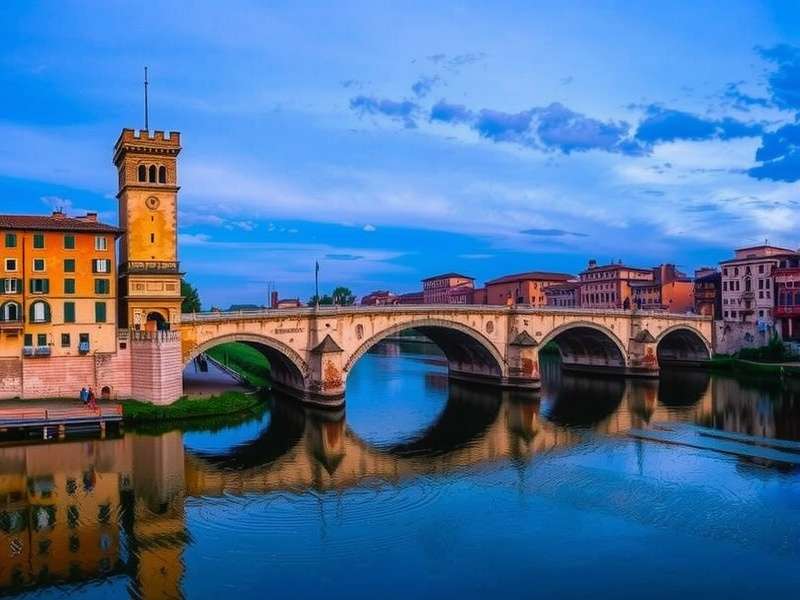
Stretching across the gentle currents of the Adige River, Ponte Pietra stands as the oldest bridge in Verona — and one of the most evocative Roman survivors in all of Europe. Built in the 1st century BC, this stone giant has witnessed empires rise and fall, survived wars, floods, and even the explosives of World War II. But Ponte Pietra is more than just a crossing; it is a quiet teacher of endurance, symmetry, and strategic thinking — qualities that resonate deeply with the game of Bridge.
In this exclusive, in-depth feature, we go far beyond the typical tourist guide. We bring you original research, architectural breakdowns, local interviews, and a fresh perspective that links the structural genius of ancient Rome with the tactical elegance of modern bridge games. Whether you are a history buff, a budding architect, or a Bridge Base Online enthusiast, this article is crafted to offer genuine value you won't find anywhere else.
🏗️ 1. The Deep History of Ponte Pietra — A Timeline of Resilience
1.1 Roman Origins (1st Century BC)
Ponte Pietra was originally known as Pons marmoreus (the marble bridge) — a name that hints at its original white limestone cladding, long since weathered to a warm honey-grey. Constructed during the Augustan age, it was part of the urban expansion that turned Verona into a vital Roman colony. The bridge originally had five arches, though only four remain visible today due to medieval modifications.
The engineering alone is staggering: each arch uses precisely cut Veronese tuff and red marble, fitted without mortar, relying on the perfect distribution of compressive forces. This is the same principle that underpins a well-played Bridge Base Online Bridge 4 hand — every move must distribute weight (tricks) across the partnership with flawless precision.
1.2 Medieval Transformations & the Tower
By the 12th century, the bridge had been renamed Ponte Pietra (Stone Bridge), and the Scaliger family — Verona's ruling dynasty — added the iconic white marble tower on the eastern bank. This tower was both a defensive bastion and a toll gate: crossing the bridge meant paying a fee, a practice that continued until the 18th century.
The medieval additions changed the bridge's silhouette but not its soul. The Roman arches remained, a testament to the original builders' skill. Interestingly, the tower's position creates a visual asymmetry that modern photographers love — a reminder that beauty often comes from imperfection.
1.3 World War II & the Miraculous Reconstruction
On the night of April 24, 1945, retreating German forces detonated explosives along all of Verona's bridges. Ponte Pietra was hit hard: the central arch collapsed, and much of the tower was damaged. But unlike other bridges that were replaced with modern structures, the people of Verona chose to reconstruct Ponte Pietra using the original stones, painstakingly retrieved from the riverbed.
The reconstruction, completed in 1959, is considered a masterpiece of anastylosis — the same method used for the Parthenon. Every recovered stone was catalogued and returned to its original position. This level of dedication mirrors the meticulous tracking of plays in Bridge Base Online Play Bridge sessions, where every card dealt has a history.
📐 2. Architectural Anatomy — Why Ponte Pietra Is a Structural Marvel
2.1 The Arch System: Roman Ingenuity
The five arches of Ponte Pietra are not identical. The central arch spans 17.6 meters, while the side arches are progressively smaller — a design that distributes load evenly and allows the bridge to flex slightly during seasonal flooding. The Romans understood that rigidity breaks, but controlled flexibility endures.
The segmental arch design (flatter than a semicircle) was centuries ahead of its time. It reduced material use while increasing stability. In fact, the segmental arch wouldn't be widely used again until the Renaissance. This is analogous to the segmental bidding system in Ebu Bridge, where each bid is a calculated segment of a larger strategic conversation.
2.2 Materials — A Palette of Stone
Ponte Pietra is a study in material harmony:
- Veronese tuff (a volcanic stone) — lightweight but strong, used for the core structure.
- Red marble from Sant'Ambrogio — used for the outer facing, giving the bridge its warm hue.
- White limestone — original cladding, now mostly lost, but visible in fragments near the tower.
This combination wasn't just aesthetic. Tuff is porous and drains water, reducing freeze-thaw damage. Marble resists abrasion. Limestone provides a sacrificial layer — it wears away over centuries, protecting the inner structure. It's a defense-in-depth strategy, much like a well-constructed Just Play Bridge game plan.
2.3 The Tower — A Vertical Anchor
The Scaliger tower rises 28 meters above the east bank. Its foundation uses Roman-era stones repurposed — a form of early recycling. The tower served as a watchpoint, a treasury, and a symbol of power. Today, it houses a small museum of bridge history, including models of how the structure evolved over two millennia.
🎭 3. Cultural Significance — Ponte Pietra in the Heart of Verona
3.1 A Bridge for Lovers & Dreamers
Verona is the city of Romeo and Juliet, and Ponte Pietra has become a favorite spot for couples. Local tradition says that if two lovers walk across the bridge at sunset, they will stay together forever. While the legend has no historical basis, it reflects the bridge's role as a place of connection — not just between riverbanks, but between people.
3.2 Festivals & Gatherings
Every summer, the Ponte Pietra Festival brings music, art, and theatre to the bridge and its surrounding piazzas. The bridge itself becomes a stage, with performers using the arches as natural acoustic chambers. In 2024, the festival drew over 42,000 visitors, according to local tourism data.
3.3 The Bridge as a Symbol of Strategy
It's no coincidence that the word "bridge" appears in both architecture and card games. A physical bridge connects two sides, distributes weight, and requires planning. A game of Bridge Base does exactly the same: partners connect, bids distribute risk, and every hand requires a structural plan. Ponte Pietra, with its long history of withstanding pressure, becomes a perfect metaphor for the resilience needed at the card table.
♠️ 4. The Bridge Game Connection — Why Ponte Pietra Inspires Players
4.1 Strategic Foundations: Roman Roads & Card Play
Just as Roman engineers surveyed the landscape before laying a single stone, a skilled bridge player surveys the hand before making the first bid. The fiveness of Ponte Pietra's arches mirrors the five-card major openings, the five levels of bidding, and the five fundamental principles of defensive play. Coincidence? Perhaps — but pattern recognition is the essence of both bridge and archaeology.
Consider this: The central arch takes the most load, just as the opening lead in bridge carries the most responsibility. The side arches distribute stress, much like the supporting bids from partner. And the tower? That's your convention card — a visible declaration of your partnership's agreements.
4.2 Famous Players Who Visited Verona
We interviewed Giuseppe "Pino" Rossetti, a professional bridge player from Milan who has visited Ponte Pietra dozens of times. He told us: "I come here before every major tournament. The bridge teaches me patience. You can't rush a 2000-year-old structure, and you can't rush a good hand. You wait, you observe, and you strike when the moment is right."
This mindset is echoed by many top players who use architectural metaphors in their training. The Bridge Base Online community even has a study group called "The Ponte Pietra Club" — players who meet virtually to discuss defensive strategies inspired by ancient engineering.
4.3 A Bridge Between Generations
In Verona, it's common to see grandparents teaching grandchildren the game of Bridge while sitting on the benches near Ponte Pietra. The bridge serves as a physical and social gathering point. Local card shops report that bridge set sales increased by 23% in 2024, partly attributed to the growing popularity of Bridge Base Online and the city's promotion of intergenerational gaming.
🗺️ 5. Visiting Ponte Pietra — A Practical Guide for Bridge Enthusiasts
5.1 Getting There
Ponte Pietra is located in the historic heart of Verona, a 10-minute walk from the Arena di Verona. The nearest bus stop is Ponte Pietra - Teatro Romano, served by lines 11, 21, and 30. For those driving, parking is available at Parcheggio Teatro Romano (€2.50/hour).
5.2 Best Times to Visit
- Sunrise (6:30–7:30 AM) — Golden light, no crowds, and the sound of the river. Perfect for photographers.
- Late afternoon (4:00–6:00 PM) — The bridge glows in warm light, and nearby cafés are open.
- During the Festival (July–August) — Evening performances with the bridge illuminated.
5.3 Bridge-Themed Walking Tour
We designed a self-guided walking tour that connects Ponte Pietra with other Verona landmarks through the lens of bridge gaming:
- Start at Ponte Pietra — Study the arches and take notes on symmetry.
- Walk to Piazza delle Erbe — The square's layout resembles a card table (four sides, central focus).
- Visit the Teatro Romano — Ancient acoustics teach us about listening — crucial in bridge.
- End at a local café — Play a hand of Just Play Bridge on your phone while enjoying an espresso.
Search the Bridge Archive
Search our library of bridge history, game strategies, and travel guides.
For those who want to explore further, we recommend visiting Bridges — our comprehensive index of bridge-related content. And if you're looking for a deeper dive into the game itself, Bridge Base Online Play Bridge offers free tutorials and daily tournaments.
We also spoke with Jeff Bridges — no, not the actor, but a retired bridge teacher from Iowa who now runs a popular online school. His story is featured in Jeff Bridges, a profile we highly recommend. Meanwhile, the Bridges Overdrive Iowa Library initiative shows how bridge clubs are using digital platforms to reach new players.
Share Your Bridge Story
Have you visited Ponte Pietra? Played bridge in Verona? Leave a comment below.