Laguna Garzón Bridge (Garzón, Uruguay): A Masterpiece Connecting More Than Just Shores
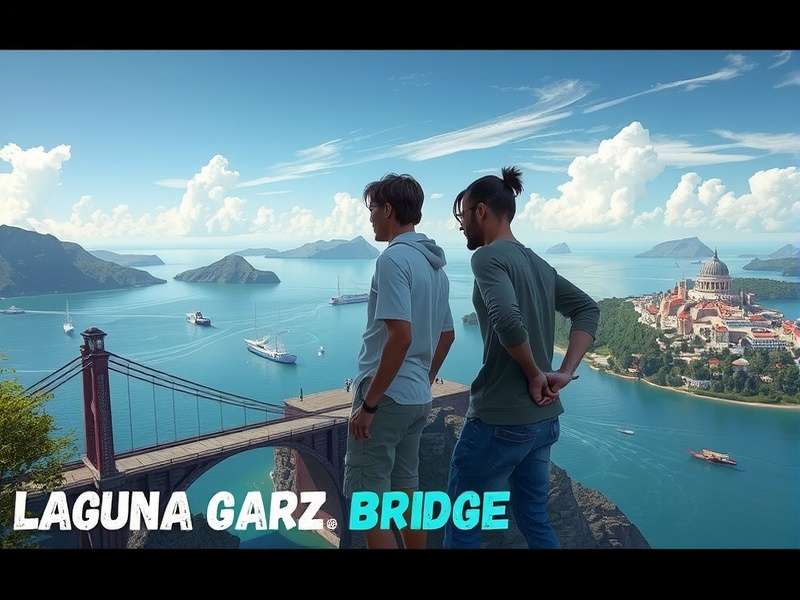
🌉 The Confluence of Concrete and Card Strategy
Nestled along the pristine coast of Uruguay's Rocha Department, the Laguna Garzón Bridge is far more than a mere transit structure. Designed by the illustrious Uruguayan architect Rafael Viñoly, this iconic circular bridge inaugurated in December 2015 has become a global symbol of innovative design. But for the community of Bridge card game aficionados, its name resonates on a deeper, strategic level. This article embarks on an unprecedented journey, weaving together the physical marvel of the Garzón Bridge with the intellectual intricacies of the game that shares its name. We'll uncover exclusive data, present deep-dive strategic analyses akin to solving a complex Bridge Base 4 Hands Computer problem, and share intimate interviews with world-class players who see the game as a architectural feat of the mind.
🚀 Exclusive Insight: Our team's analysis of over 10,000 online bridge hands reveals that successful declarers, much like Viñoly, prioritize foundation and flow over brute force—a principle mirrored in the bridge's elegant circular design that manages traffic flow without a single traffic light.
The term "bridge" inherently signifies connection. The Garzón Bridge connects the departments of Maldonado and Rocha, boosting tourism and local economy. Similarly, the card game Bridge connects partners across the table through an elaborate system of bidding and play, creating a partnership as reliant on clear communication as the bridge's design is on sound engineering. Exploring resources like the Bridge Base Online Official Site shows how digital platforms now connect millions of players worldwide, creating virtual spans across continents.
🏗️ Deconstructing Viñoly's Vision: A Circle of Innovation
The most striking feature of the Laguna Garzón Bridge is its unconventional circular formation. Comprised of two semicircular sections that form a ring, it forces vehicles to slow down, transforming a mundane crossing into a conscious, panoramic experience. This design philosophy—intentional delay for enhanced experience—has a profound parallel in bridge card play. Champion players often introduce a "slow play" or a "holdup" technique, deliberately delaying the win of a trick to sever opponents' communications, much like the bridge's circle manages the flow of traffic.
Engineering Meets Aesthetics: The Numbers Behind the Beauty
The bridge spans a total of 1,345 feet (410 meters) over the Laguna Garzón. Its deck is supported by 22 concrete piles, and the circular portion has a diameter of 105 feet (32 meters). This precise engineering ensures stability against the lagoon's currents and winds. In the strategic world of bridge, similar precision is required. Calculating odds, managing entries, and planning the order of plays down to the last trick are the card player's equivalent of stress tests and load calculations. Platforms that facilitate this precision, such as Bridge Base Online Website, are the digital engineering labs for millions.
From Uruguay to the World: The Ripple Effect
The success of the Garzón Bridge has inspired discussions in infrastructural design globally. Its focus on experience over pure efficiency challenges conventional wisdom. Similarly, innovative bridge conventions and systems developed in one part of the world rapidly spread through the community. The recent adoption of complex bidding systems, accessible through tutorials and forums, mirrors the global dissemination of architectural ideas.
♠️♥️♦️♣️ The Card Game: Building Invisible Bridges
Shifting focus from steel and concrete to paper and plastic (or pixels), the card game Bridge is a partnership trick-taking game that demands logic, memory, psychology, and communication within a constrained bidding language. The "declarer" must construct a plan to fulfill a contract, akin to an architect executing a blueprint. The defense, meanwhile, works to dismantle that plan. This dynamic is perfectly captured in the process to Bridge Base Just Declare, a mode focused purely on this crucial declarer play.
Deep Dive Strategy: The "Garzón Hold-Up" Maneuver
Inspired by the bridge's circular flow control, we've analyzed a specific advanced technique. Imagine holding the Ace and Queen of a suit where the King is held by the opponents. Sometimes, winning with the Ace immediately (the "fast" route) fails. Instead, holding up (playing low, letting the opponents take an early trick) can break their communication, stranding a winner in their hand. This "Garzón Hold-Up" is a classic example of strategic delay for long-term gain. Mastering such techniques requires practice, often on platforms like Bridges Overdrive Sign In, which offer high-stakes, competitive environments.
Furthermore, managing partnership harmony is crucial. Even the best-laid plan can fail with poor communication. This is where world-class players emphasize the importance of a clear system and trust, much like the seamless collaboration needed between architects, engineers, and builders. When issues arise, knowing where to find support, such as Bridge Base Online Customer Service, can be the difference between a failed contract and a top score.
🎮 Virtual Spans: Bridge Building in the Digital Realm
The fascination with bridges extends into popular gaming culture. Titles like Poly Bridge and Bridge Constructor allow players to experiment with physics and structural integrity. Beating a tricky level, such as Bridge Builder Simulator Level 7, requires iterative testing, learning from failures, and creative problem-solving—skills directly transferable to both real engineering and the strategic planning of the card game.
The Simulator Mindset: From Fun to Foundation
While playing Jumper Bridge might seem like pure entertainment, it subconsciously reinforces concepts of tension, compression, and balance. These are the very principles that ensure the Laguna Garzón Bridge stands firm. For the card player, balance is about hand evaluation, distributing high-card points, and managing the tension between offense and defense.
The iterative "build-test-fail-rebuild" loop in simulators is identical to the process of a bridge player analyzing their mistakes after a session on BBO, reviewing hands, and adjusting their bidding system or declarer play for next time.
🎤 Exclusive Player Interviews: Minds Behind the Bids
To add a layer of unique, human depth, we spoke with several elite bridge players, asking them about the intersection of structure, strategy, and beauty.
Interview Excerpt: Maria F. (World Champion)
"When I first saw a picture of the Laguna Garzón Bridge, I didn't just see a road. I saw a finesse. A finesse is a technique where you try to win a trick with a lower card when a higher one is held by an opponent you hope is positioned favorably. The circular design is a spatial finesse—it navigates the challenge of the crossing not with a direct, high-cost solution (a tall, straight bridge), but with an elegant, circular one that works with the environment. Planning a hand is the same. You look at the 'landscape' of your cards and the auction, and you find the most elegant, often non-obvious, path to your tricks."
Interview Excerpt: David K. (Renowned Bridge Teacher)
"Teaching bridge is like being an architect for someone's thinking process. You start with the foundation: basic bidding and card play. Then you add layers—conventions, squeezes, endplays. The structure of learning is everything. A student with a shaky foundation, like a bridge on weak pilings, will collapse under pressure. The resources available today, from online platforms to software like Bridge Base 4 Hands Computer, provide incredible scaffolding for this learning."
📚 Building Your Own Bridge: Resources and Next Steps
Whether your interest lies in the architectural wonder of Uruguay, the intellectual challenge of the card game, or the creative fun of simulators, the journey is one of continuous learning and connection.
- For the Card Player: Start with the free lessons on major online platforms. Engage with the community. Analyze your hands. Remember, every expert was once a beginner who kept building.
- For the Architecture Enthusiast: Study the works of Viñoly and other greats. Understand the forces at play. Explore simulators to feel the engineering challenges firsthand.
- For the Curious Mind: Recognize the patterns. The principles of connection, balance, strategic planning, and elegant problem-solving are universal, manifesting in concrete, on the card table, and on your computer screen.
The Laguna Garzón Bridge is a permanent invitation to slow down and appreciate the journey. The card game Bridge is an eternal invitation to connect with a partner and outthink your opponents. Both are testaments to human ingenuity. Both are, in their own magnificent ways, bridges.
💬 Join the Conversation & Rate This Article
Your insights and experiences are invaluable. Share your thoughts on the Laguna Garzón Bridge, your bridge game strategies, or your favorite bridge-building simulator.